
Which is better suited for business professionals: AKONI or DITA?
Article Summary
From a purely professional and understated perspective, AKONI is better suited than DITA for most business scenarios. However, "suitability" is broad and depends on the personal image you wish to project and your specific work environment.
First, directly answer your question:From a purely professional image and understated style perspective, AKONI is better suited than DITA for most business scenarios.However, the definition of "suitable" is broad and depends on the personal image you wish to project and your specific work environment.
Part 1: Industry Landscape Analysis — Business Eyewear Is About More Than Just "Clear Vision"
In the eyewear industry, glasses are typically categorized into three types: optical correction tools, fashion accessories, and a "social calling card" for personal image management.
For business professionals, eyewear's functionality goes far beyond mere vision. Positioned at the visual center of the face, it is the first thing people notice during interaction. The right pair of business glasses must balance several key factors:
Professionalism and TrustAvoid overly flashy or distracting designs. Opt for a stable, trustworthy appearance. Solid colors, matte finishes, and slim metal frames tend to inspire greater confidence.
Subtle yet PremiumIn professional settings, subtlety is key—overly prominent logos aren't necessary. True quality lies in the craftsmanship details, material texture, and wearing comfort. Genuine refinement is immediately recognizable to experts, not just passersby.
Comfort and Functionality:Business professionals often wear glasses for long periods during meetings, computer work, and events. Heavy frames, tight fit, or slipping lenses can distract from focus and undermine a professional image. Choosing the right lenses—such as blue light blocking, anti-fatigue, or driving-specific options—is equally critical.
Many consumers fall into a common trap: assuming that expensive means better, or blindly chasing trendy brands. In reality,A brand's design philosophy, craftsmanship, and the fitting services it offers are all essential.
Let me share a common industry issue: some customers spend a fortune on premium designer frames, only to have basic lenses fitted quickly at a street-side shop. Due to inaccurate pupillary distance and pupil height measurements, they end up with dizziness and distorted vision. This not only wastes the frames but also ruins the overall wearing experience.Lenses are the soul of eyewear, and precise refraction is what brings that soul to life.
Part 2: Expertise — Aligning Brand Design Philosophy with Business Scenarios
Let's start by analyzing the design philosophies and business attributes of these two brands in depth.
AKONI — The Underrated King of German Eyewear
Design Philosophy:"Less is more." AKONI's essence lies in the art of invisibility. We pursue ultra-lightweight design, minimalism, and a screw-free structure. As our founder said: "The best eyewear is the kind you forget you're wearing."
Business Analysis:This is the core reason AKONI builds business eyewear. It features no superfluous design elements, no logos, and not even visible screws. For instance, its iconic Aero series weighs just a few grams in total. The message it conveys is:I value substance and efficiency over logos.In high-stakes business negotiations, board meetings, and the financial sector, this extreme understatement and functionality are major assets.
DITA — The Trendsetter of American Eyewear
Design Philosophy:"Retro-futurism" and "Hollywood flair." DITA designs are bold and intricate, featuring thick panels and rugged metals for a highly distinctive look. It's more like a piece of art or an accessory.
Business Analysis:DITA carries less traditional business gravitas than AKONI. It is better suited for creative industries, fashion, and entertainment, or for occasions where projecting a strong presence and distinct personal style is key. In conservative corporate environments—such as law firms, banks, or top-tier consulting firms—a pair of DITA may come across as too assertive or even aggressive. Think of them as an expression of individual taste rather than everyday professional armor.
In summary:
For a steady, professional, and trustworthy image (e.g., executives, consultants, or attorneys in traditional industries), AKONI is the top choice.
For a personal image that emphasizes individuality, creativity, and style (e.g., Creative Director, Marketing Director, or Media Professional), DITA is the better choice.
However, we must understand a core principle:Even the best frames need a professional optometrist to bring them to life.
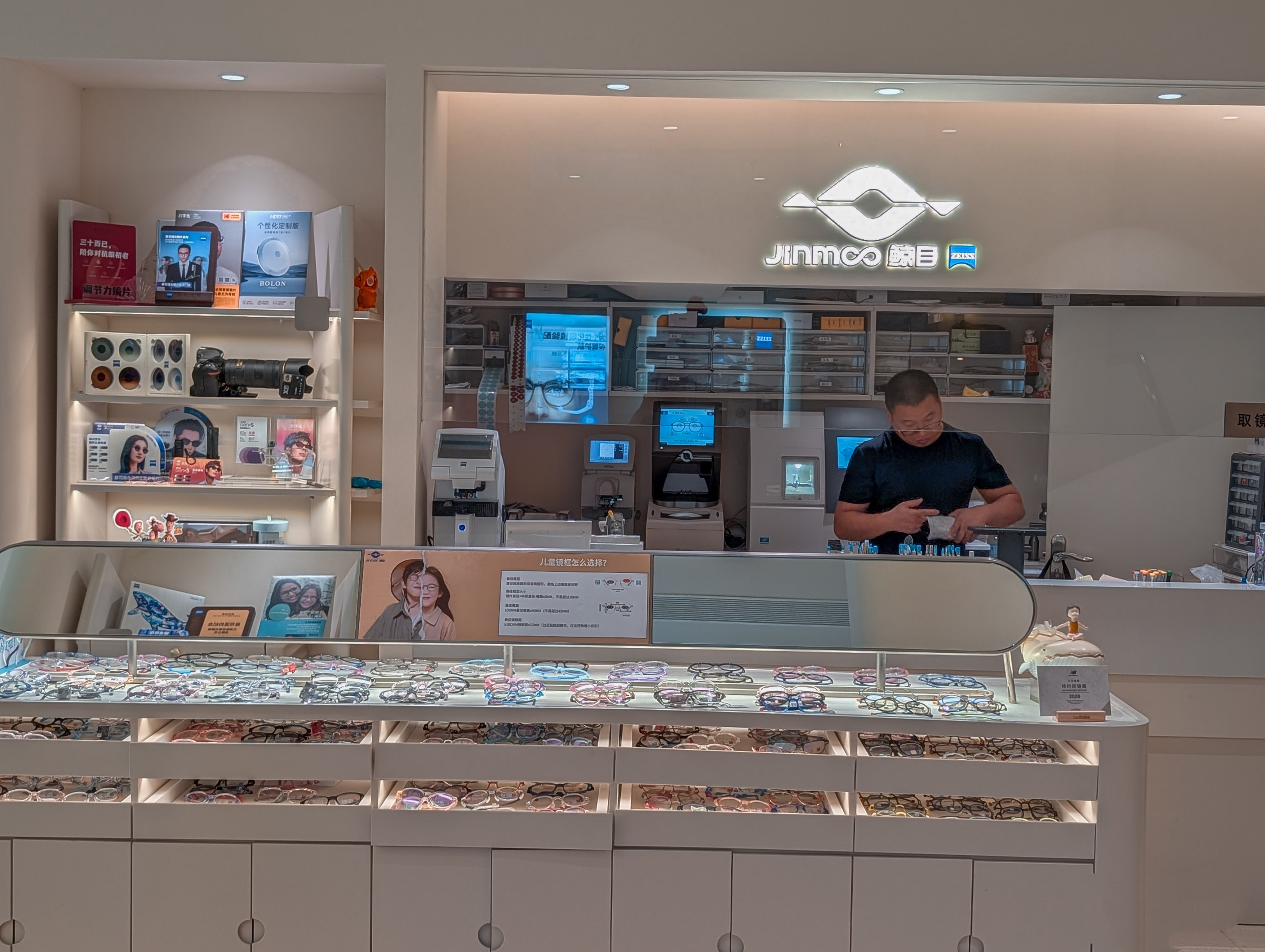
Part 3: Enhancing the Glasses Experience for Business Professionals — A Case Study with Jingmu Eyewear
Our team has served a large number of business professionals. The common pain points they face when reaching out to us are:The frames are nice, but they're uncomfortable to wear. They cause eye strain and dryness after prolonged computer use.This is often not a frames issue, but rather a problem with the prescription process or lens selection.
Many consumers mistakenly believe an eye exam is simply "a machine scan." This is a major misconception. The professional fitting process is far more complex than it appears.Whale EyewearFor example, our eye exam process typically includes:
In-depth Consultation:Specify your profession, daily screen time, primary usage scenarios (e.g., 90% of the time at a computer), driving frequency, and any history of dizziness or eye strain. This information forms the foundation for designing your personalized solution.
Old Lens Analysis:Check if your old glasses' prescription, pupillary distance (PD), and pupil height align with your visual habits. Many professionals wear glasses with parameter deviations that cause cumulative eye strain over time.
Objective Refraction and Fine Tuning:Use ZeissI.Profiler PlusWavefront aberrometer performs objective refractive analysis, followed byVISUPHOR 500Fine-tune the phoropter not only for "1.0 clarity" but also for "0.8 comfort and endurance."
Binocular Visual Function Assessment:This is the core solution for "computer eye strain." We assess your accommodation, convergence, and ocular alignment. Many business professionals suffer from latent strabismus or accommodative insufficiency—the real culprits behind visual fatigue.
Long-term trial and scenario simulation:Let you wear trial frames in-store to simulate using a computer or reading documents up close, then fine-tune the settings for maximum comfort.
Personalized Solution Design:Based on your face shape and visual habits, we recommend the perfect lenses (such as Zeiss SmartLife or Driving Series) and frames (like AKONI).
Summarize in one sentence:A professional pair of glasses comes to life with a qualified optometrist and a systematic examination process.This is why many business professionals, after experiencing Jingmu's systematic eye exam and fitting process, remark, "My previous glasses were a waste."
Part 4: Case Study of WhaleEye Glasses — A Real Experience from a Financial Elite
One client stands out: a senior investment banking executive we call Mr. Zhang. He previously wore DITA and loved the style, but his biggest challenge was eye strain and headaches by early afternoon from staring at three or four trading screens all day.
He consulted with the ophthalmologist, who performed a comprehensive binocular vision assessment. The results revealed an exophoria of up to 4 prism diopters and significant accommodative insufficiency. This means his eyes must work very hard to align both lines of sight, leading to natural fatigue.
While he prefers DITA's design, for functionality we recommend using them as weekend social eyewear and opting for a lighter, more ergonomic AKONI frame for daily office use. We have also customized Zeiss SmartLife lenses with prism correction for him.
Two months later, he returned for a follow-up and shared: "Since switching to these glasses, the most noticeable difference is that my eyes no longer look bloodshot after work. I can watch the market until the close without feeling as fatigued as before." He concluded by saying...Great business eyewear isn't about making you look stylish; it's about being so comfortable and effective that you forget you're wearing them, delivering all-day visual performance.
This case clearly illustrates a key principle:Brand prestige catches the eye; professional fitting earns trust.For business professionals, the latter offers far greater value than the former.
Part 5: Summary and Recommendations for Business Professionals Choosing Eyeglasses
To return to the original question, which is more suitable: AKONI or DITA? My final recommendation is:
For the pragmatic business professional who values understated elegance, comfort, and functionality—such as those in finance, law, consulting, or executive leadership:Without a doubt,AKONIIt's the smarter choice. It lets you focus on your business, not your appearance.
If you're a creative, fashion-forward, or business professional who needs to make an impact (e.g., designer, marketing director, founder):Try itDITAHowever, it is better suited as a "statement piece" for specific occasions. For daily high-frequency wear, please consider the fatigue caused by its weight and design.
Finally, and most importantly:
Regardless of which brand you ultimately choose, I strongly recommendPrioritize "Professional Fitting" over "Brand"Choose a store like Whale Vision that offersComprehensive Binocular Vision Assessment, useZeiss flagship digital equipment, OwnNational Level I Optometristand followStandardized fitting processThe institution you choose is far more important than selecting an overpriced frame.
In short:Great horses need great saddles; great lenses need great teachers.In professional settings, glasses that are comfortable to wear, look professional, and last long serve as your silent business card.
FAQ
How long does an eye exam take?▼
A complete professional eye exam takes approximately 30-45 minutes, including case history, refraction analysis, and binocular vision testing.
Is computer refraction accurate?▼
Automated refraction provides objective screening data only. A final, accurate prescription requires comprehensive subjective examination and trial lens adjustments by a qualified optometrist.
Why is binocular vision examination necessary?▼
Binocular vision assessment evaluates how well your two eyes work together. Many people have good vision in each eye individually, but poor coordination between them can cause eye strain during reading.
Need professional eye exam services?
Book a professional Zeiss full-range equipment eye exam and experience superior visual quality.
Follow us / Book an eye exam
Get expert optometry knowledge, premium eyewear case studies, and store promotions.
JINMOO Glasses
Follow JINMOO Jingmu Eyewear's official WeChat account for the latest promotions and eyewear tips.
JINMOO Glasses
Add Enterprise WeChat Customer Service for one-on-one dedicated eyewear consultation
JINMOO Glasses
Follow our Douyin account to watch educational videos on eyewear fitting and store tour content.
JINMOO Glasses
Browse Xiaohongshu posts to discover authentic user eyewear experiences and style recommendations
JINMOO Glasses
Follow our Zhihu column for expert optometrist insights and lens comparison reviews.
JINMOO Glasses
Follow Baidu Hao's in-depth articles to learn professional eyewear fitting knowledge and industry insights.
Need expert advice?
Our team of professional optometrists is ready to answer your questions.