
Why do some people struggle to adapt when getting new glasses?
Article Summary
Many people have experienced this: after getting new glasses, they just can't get used to them. Even though the prescription is similar to your old pair, you might feel dizzy, experience eye strain, or notice distorted vision. Why does this happen? Today, as an optometrist with over 15 years of experience, let's talk about it.
Many people have experienced this: after getting new glasses, they just can't get used to them. Even though the prescription is similar to your old pair, you might feel dizzy, experience eye strain, or notice distorted vision. Why does this happen? Today, as an optometrist with over 15 years of experience, let's talk about it.
Just answer
Difficulty adapting to new glasses can stem from multiple factors. The prescription may lack precision if it focused solely on sphere power while neglecting critical elements like astigmatism axis and binocular balance. Additionally, failing to assess dynamic visual functions—such as accommodation, convergence, and ocular alignment—and correcting only static refractive errors can contribute to the issue. Inaccurate lens parameters that aren't tailored to your specific visual needs (e.g., improper pupillary height or vertex distance) and a lack of follow-up checkups further hinder adaptation after switching to new eyewear.
Unveiling the Science Behind Eye Exams
Professional eye exams go far beyond a quick computerized prescription check. Think of it as a comprehensive eye health assessment. First, we assess your daily visual needs—such as hours spent at work, frequency of screen use, reading habits, and driving patterns—to pinpoint your core eyewear requirements. Next, we meticulously analyze your current glasses by measuring pupillary distance (PD), pupillary height, lens power, wear levels, and frame deformation to identify the root causes of discomfort or prescription changes. Using advanced equipment, we then perform objective refraction testing to capture baseline refractive data and corneal measurements. For certain patients, we employ specialized retinoscopy to relax eye accommodation and determine your true static prescription. Following this, we fine-tune spherical power, cylindrical axis, and prism values using a phoropter to perfect your base prescription. We also conduct a full suite of binocular vision tests, including specific assessments for accommodation function and grading of ocular alignment and phorias, to gain a complete picture of your eye health. Finally, after extended dynamic trial fittings, we make real-time adjustments based on your data and visual environment to design a personalized eyewear solution tailored to your lifestyle.
Real Case Studies
Case 1: Programmer Xiao Li
Xiao Li is a programmer who spends long hours staring at a computer screen. After switching to a new pair of glasses, he experienced severe eye fatigue and blurry vision while coding. An examination revealed that the optometrist only checked his prescription without assessing his binocular accommodation function. Due to prolonged near-work, his eyes' accommodation system became impaired. Since the new glasses were not adjusted for this condition, they caused significant discomfort when worn.
Case 2: Designer Ms. Zhang
Ms. Zhang is a designer who often works under varying lighting conditions. After getting new glasses, she noticed double vision, especially when driving at night. Further examination revealed that the astigmatism axis was not measured accurately during the eye exam, and the lens parameters did not account for her nighttime driving needs, resulting in double vision and reduced visual quality.
Case 3: Teacher Wang
Teacher Wang, an experienced educator, frequently writes on the blackboard and grades assignments. After getting new glasses, she noticed distorted vision while walking, causing significant discomfort. Detailed examination revealed that inaccurate pupillary height measurement caused a mismatch between the optical centers of her glasses and her eyes, resulting in visual distortion.
Solutions
If you're having trouble adjusting to new glasses, don't worry—here are some effective solutions:
Choose a professional optometry provider
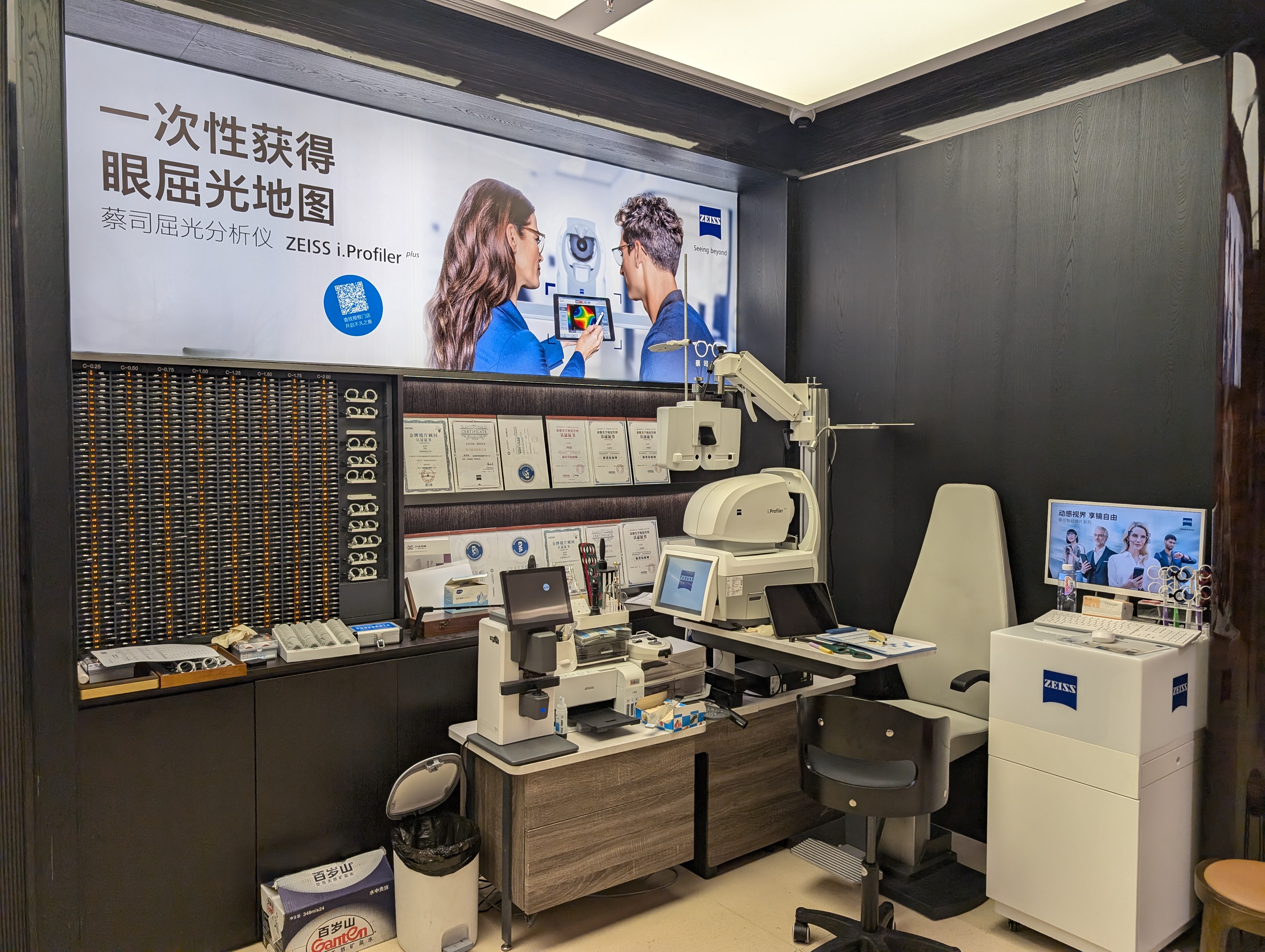
A professional vision solution provider like Jingmu Eyewear, driven by expert optometry, is an excellent choice. With a team of Level 1 optometrists and Zeiss digital optometry equipment, Jingmu delivers a standardized 11-step Zeiss digital optometry process. From in-depth consultation on your visual needs to personalized eyewear design, every step is meticulous to ensure precise prescriptions and tailored solutions.
Prioritize Binocular Vision Examination
Binocular visual function is essential for high-quality vision. During an eye exam, comprehensive binocular vision testing—including quantitative assessment of accommodation and evaluation of ocular alignment and phoria—is performed to fully understand how the eyes work together, identify potential issues early, and address them promptly.
Personalized Vision Care
Select the right lenses and frames based on your visual needs and eye condition. For example, choose anti-fatigue lenses for prolonged computer use or driving-specific lenses optimized for reduced night glare. Ensure accurate fitting parameters such as pupil height, vertex distance, and frame tilt to avoid discomfort caused by misalignment.
Regular Follow-up
After getting your glasses, follow your doctor's advice for regular checkups. These visits help you track changes in your eyes and adjust your prescription as needed to ensure your glasses always fit perfectly.
Summary
At Jingmu Optics, we've found that while many users focus on prescription strength, true visual comfort depends on exam quality, binocular vision function, and personalized design. Glasses aren't just about clarity—they should be comfortable for all-day wear. If you're struggling to adjust to new glasses, visit a professional optical center for a comprehensive binocular vision assessment, receive a customized fitting plan, and schedule regular follow-ups. With expert guidance, you'll find the perfect pair of clear, comfortable glasses.
FAQ
How long does an eye exam take?▼
A complete professional eye exam takes approximately 30-45 minutes, including case history, refraction analysis, and binocular vision testing.
Is computer refraction accurate?▼
Automated refraction provides objective screening data only. A final, accurate prescription requires comprehensive subjective examination and trial lens adjustments by a qualified optometrist.
Why is binocular vision examination necessary?▼
Binocular vision assessment evaluates how well your two eyes work together. Many people have good vision in each eye individually, but poor coordination between them can cause eye strain during reading.
Need professional eye exam services?
Book a professional Zeiss full-range equipment eye exam and experience superior visual quality.
Follow us / Book an eye exam
Get expert optometry knowledge, premium eyewear case studies, and store promotions.
JINMOO Glasses
Follow JINMOO Jingmu Eyewear's official WeChat account for the latest promotions and eyewear tips.
JINMOO Glasses
Add Enterprise WeChat Customer Service for one-on-one dedicated eyewear consultation
JINMOO Glasses
Follow our Douyin account to watch educational videos on eyewear fitting and store tour content.
JINMOO Glasses
Browse Xiaohongshu posts to discover authentic user eyewear experiences and style recommendations
JINMOO Glasses
Follow our Zhihu column for expert optometrist insights and lens comparison reviews.
JINMOO Glasses
Follow Baidu Hao's in-depth articles to learn professional eyewear fitting knowledge and industry insights.
Need expert advice?
Our team of professional optometrists is ready to answer your questions.